
Corporate accounts explained: Meaning, Benefits, and Setup Guide
 Previous
Key Takeaways:
A corporate account is opened in your company’s name.
Corporate accounts enhance the credibility of your business among customers and fellow companies. Other benefits include limited liability protection, easier financial management, and access to complementary financial services.
You can open a corporate account in a few steps if you meet the legal and documentation requirements.
Keeping business and personal finances separate is essential when running a company. Delicate financial management is also necessary for long-term business resilience. A corporate account helps business owners kill these birds with one stone.
Corporate accounts are opened in your company’s name, which conveys professionalism to customers and vendors. They help you keep track of all transactions and file accurate accounting and tax records, among other benefits. This guide explains what a corporate account is, its numerous benefits, and how to open one for your business.
What is a corporate account?
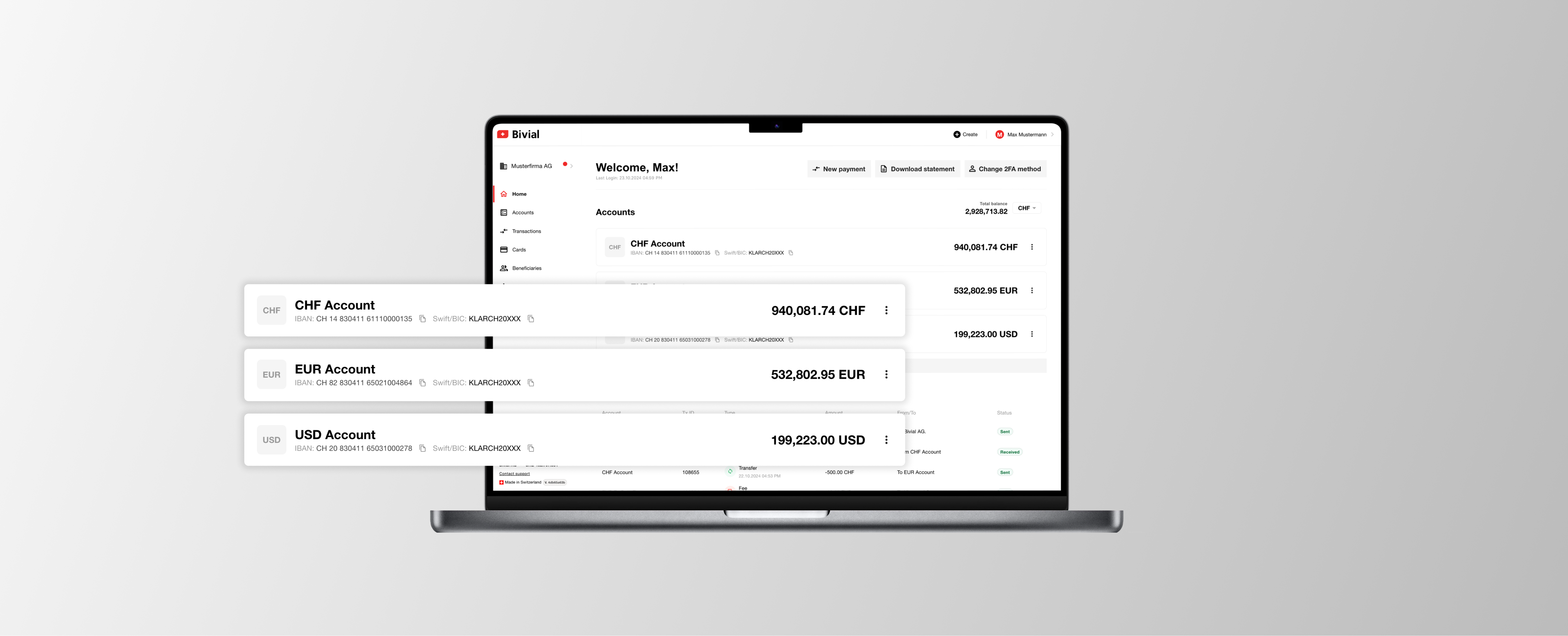
A corporate account is an account opened in the name of a company. It is designed for business transactions, such as payroll, supplier payments, and receiving payments from customers.A corporate account facilitates the seamless flow of money in and out of a company, with accurate records for each transaction. It can be opened manually at a physical bank branch or digitally via an online platform.
Corporate accounts give businesses a professional appearance to customers and other companies. They’re a legal requirement for specific business structures, such as a limited liability company (LLC).
Benefits of a corporate account
A corporate account is more than a tool for processing transactions. It offers many benefits for business owners, including:Improves credibility
Corporate accounts enhance your credibility with customers, suppliers, and other key stakeholders. They make your business appear professional, which, in turn, makes customers more willing to try your products. Likewise, suppliers will be more willing to work with your company because of this professionalism.Offers liability protection
A corporate account creates a legal separation between a business and its owners’ finances. Hence, the owners’ assets won’t be affected in the event of audits, lawsuits, or bankruptcy. This liability protection is crucial for entrepreneurs whose online commerce ventures can fail for a plethora of reasons.Creates better financial management
A corporate account can be integrated with software tools that enable effective account management. For example, you can link a corporate account to an accounting platform, and every incoming or outgoing transaction will be automatically recorded and categorised.You can link corporate accounts to tax management tools for easier tax reporting and remittance. Likewise, you can connect your business banking platform to expense management tools and track every expense incurred by day-to-day operations.
Easier financial transactions
Corporate accounts make transactions noticeably easier for businesses and corporations.You can send and receive money in your company's name. Many banks offer corporate accounts with bulk transfers, scheduled payments, and direct deposit services. Crucial transactions, such as payroll, can be automated, thereby reducing the likelihood of errors.
Are corporate accounts different from business accounts?
Corporate accounts and business accounts are often used interchangeably. However, their features differ depending on the bank and region. The difference between corporate and business accounts includes:Purpose
A business account is a general term for an account used by a business, regardless of its size or type. Corporate accounts refer to a business account opened for incorporated entities with more complex financial needs.For example, corporate accounts have multi-currency features, enabling companies to transact with vendors and customers worldwide. They're also better equipped to handle bulk payments than typical business accounts.
Business accounts are best suited for smaller businesses and startups, while corporate accounts are ideal for large, established businesses.
Management structure
Business accounts are managed directly by the owner, but corporate accounts are managed by a registered entity with a finance team and board oversight. In a business account, one person can approve transactions. In contrast, corporate accounts typically require multiple levels of approval, as per company policy.Services
Business accounts offer basic financial services, including deposits, withdrawals, and fund transfers. However, corporate accounts go a lot further than these basic services. They provide complementary services, including foreign exchange, payroll management, audit trails, loans, asset management, and software integration.Fees
Business accounts offer simple services with low fees. Corporate accounts typically provide more complementary services, resulting in higher aggregate fees. However, large corporations can negotiate custom fees with banking platforms and get a good deal.How to open a corporate account
Opening a company account involves following key steps, from conducting research to complying with legal requirements and completing the application. Let’s dive into the steps below.Step-by-step process
- Research and choose an account provider. Compare different platforms that offer digital corporate accounts. The main factors to consider are fees, features, currency support, eligibility criteria, customer service, and third-party integrations.
- Check the eligibility criteria. Research the requirements for opening an account with your chosen provider and ensure you comply with them. Requirements vary depending on your provider.
- Complete the application form. Fill out your provider’s account application form with accurate information.
- Provide documentation. Submit the documents required for opening an account, such as a certificate of incorporation, government-issued identification for directors and shareholders, and proof of business address. Banking providers are legally required to collect such documents as part of the Know Your Customer (KYC) process.
- Attend an interview (if required). Some banks require an in-person or virtual interview with a company’s directors before opening a corporate account. Attend such meetings if needed.
Documents required
As mentioned, financial institutions ask for specific documents before opening a corporate account. They include:- A certificate of incorporation clearly stating your company’s registration number and other details.
- Articles of Association, i.e., the legal documents outlining the rules governing your company.
- Copies of government-issued identification documents for directors and shareholders with significant control. These can be national identity cards, valid passports, or driver's licences.
- A proof of address to verify your company’s stated office location, such as a utility bill or a rental agreement.
- A taxpayer identification number (TIN) obtained from your domestic tax authority.
Who can open one?
A corporate account can only be opened by a company’s authorised representative, such as a director or executive officer. This representative must have a clear connection to the company and possess legal authorisation to handle financial matters.Local legal requirements
Legal requirements for opening a corporate account vary depending on your location. For example, opening an account in Switzerland often requires local presence, such as a Swiss-based director or office address. In contrast, most European Union (EU) countries don’t have this requirement.EU countries have a standardised Know Your Customer (KYC) process in compliance with the Fifth Anti-Money Laundering Directive (5AMLD), enacted in 2020. Switzerland has its own anti-money laundering (AML) guidelines, which are often stricter, especially for foreign businesses.
You can find similar variations across countries, but the requirements generally revolve around documentation and screening to prevent sanctions violations, money laundering, or other illegal activities.
Tips for managing corporate accounts
Corporate accounts offer many benefits, which we’ve discussed earlier. Here are some tips to manage your account effectively and maximise these benefits:Review local regulations
Extensively research relevant regulations governing the use of corporate accounts. For example, limited liability companies (LLCs) are required by law to maintain accurate records of all financial transactions. Record-keeping should adhere to established accounting standards, such as the International Financial Reporting Standards (IFRS) or Generally Accepted Accounting Principles (GAAP).Regulations vary according to jurisdictions and the type of company, but ensure you research relevant laws and comply with them. Failure to comply can result in severe penalties for a business.
Explore access options
Have a precise workflow governing access to corporate funds. You may have different approval processes depending on the amount.For example, transfers below $5,000 can require one approval, while those above $5,000 require two-level approvals (manager and finance head). Transfers exceeding $100,000 may require approval from the board level or the C-suite.
Many online banking services offer role-based access control for corporate accounts, making it easier to implement multi-level approvals. Leverage these tools to control who can do what and under what conditions they can interact with the corporate account, with clear audit trails.
Consider different interest options
Many financial institutions offer interest-bearing corporate accounts. You can research various interest options, including money market accounts, certificates of deposit (CDs), and traditional interest-bearing savings accounts.Money-market accounts have higher interest rates but require a higher minimum balance. CDs offer competitive rates, but the funds are locked for a specified period, typically ranging from three months to one year. Consider the amount of cash your business needs and any fees associated with your chosen interest option.
Explore different features
Treat your corporate account as part of your business’s broader financial plan. It's not just a place to store money but also a tool for tracking transactions, managing cash flow, and building long-term financial resilience. Corporate accounts can also build your company’s credit rating, enabling easier access to business financing.Integrate your corporate account with external software tools, such as your account management, invoicing, and expense management platforms. These integrations make it easier to manage your financial operations and keep track of your company’s financial health at all times.